


Fast Delivery Cheap Price High Quality Plastic Products Factory Custom Plastic Injection Mold for Plastic Parts
How Injection Molding works?
Injection molding is the use of plastic thermal physical properties, the material from the hopper into the barrel, the type of barrel by the heating ring heating, so that the material melting, in the barrel is equipped with external power motor under the action of driving rotation of the screw, material under the action of the screw;
Transport along the spiral groove and compaction, material in plus heat and screw shear gradually under the dual role of plasticizing, melting and homogenization, when screw rotation, the material in the screw groove under the action of friction force and shear force, pushing has molten material to the screw head, at the same time, screw back under the adverse effect of material, make the screw head form the loading space, complete the plasticizing process;
Then screw in the injection cylinder piston under the action of thrust, with high speed, high pressure, the store is indoor material melt through the nozzle of the injection into the mold cavity, the cavity of the molten material after pressure maintaining and cooling, curing finalize the design, mold under the effect of clamping mechanism, open mold, and by the ejection device and by ejection device to finalize the design good products sets out from the mold.
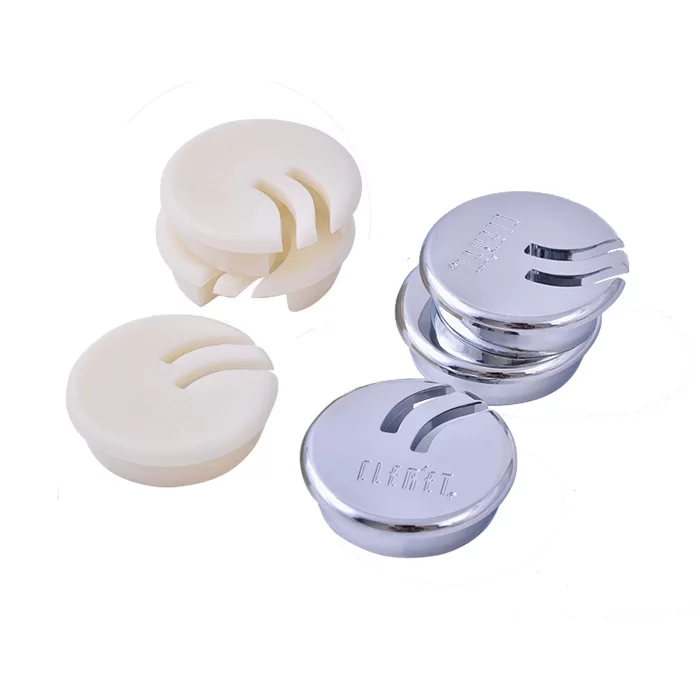
Injection molding is a method of molding industrial products. Products usually use rubber injection molding and plastic injection molding. Injection molding can also be divided into injection molding, molding and die-casting.
Injection molding machine (hereinafter referred to as injection machine or injection molding machine) is the main molding equipment that uses plastic molding molds to make thermoplastic or thermosetting materials into plastic products of various shapes. Injection molding is realized through injection molding machines and molds.
Advantages
1. Two sets of injection and blow molding molds and one hollow core mold with valve must be used for product molding, and the mold for injection molding blank should be able to withstand high pressure, and the cost of molding equipment is high;
3. It is easy to be uneven in cold and heat, so the size of the product is limited;
Materials for CNC Milling
| Hard Plastics | Flexible Plastics | Rubber-Like Varieties | Mixed plastic |
|---|---|---|---|
| ABS | Acrylonitrile Butadiene Styrene | Polyethylene ( PE ) | TPE | Thermoplastic Elastomer, Santoprene | PC-ABS | Polycarbonate-Acrylonitrile Butadiene Styrene |
| ASA | Acrylonitrile Styrene Acrylate | Polystyrene ( PS ) | TPU | Thermoplastic Polyurethane ( Shore A) | PC-PBT | Polycarbonate-PolybutyleneTerephthalate |
| CA | Cellulose Acetate | PET | LSR | Liquid Silicone Rubber | PC-PET | Polycarbonate-Polyethylene Terephthalate |
| COPO | Copolyester | EVA Foam | LSR | Liquid Silicone Rubber | PS-PPE | Polystyrene-Polyphenyl Ethers |
| PCT I Polycyclohexylenedimethylene Terephthalate | EPS Foam | PVC | Polyvinyl Chloride ( Shore A) | PE-PS | Polyethylene-Polystyrene |
| PPA | Polyphthalamide | PU Foam | POE | Polyolefin Elastomer | PE-PP | Polyethylene-Polypropylene |
| HDPE | High-Density Polyethylene | MPR | Melt Processable Rubber | PBT-PET | Polybutylene Terephthalate -Polyethylene Terephthalate | |
| PEEK | EPDM | Ethylene Propylene Diene Monomer Rubber, Viton | PBT-PET | Polybutylene Terephthalate -Polyethylene Terephthalate |
Surface Finishes for Injection Molding
| Printing | Painting |
|---|---|
| Screen screen printing | Ordinary coloring |
| Curved surface printing | Pu gloss |
| Bronzing |