CNC Machining: Plastic parts
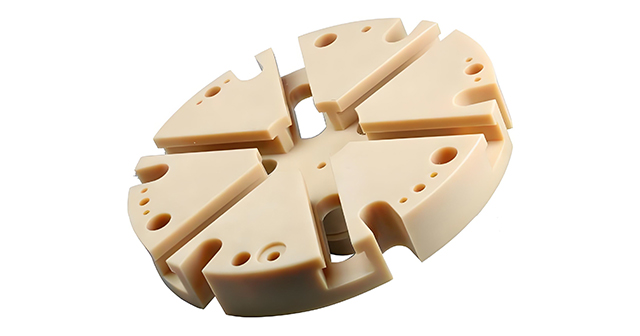
Plastic is a versatile engineering material that contributes to the manufacturing industry with various unique properties. Plastic is used in CNC manufacturing for prototyping design, customized parts, and large-scale production of different products.
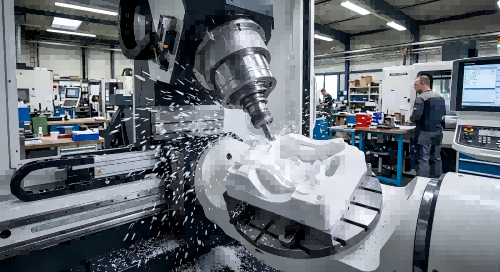
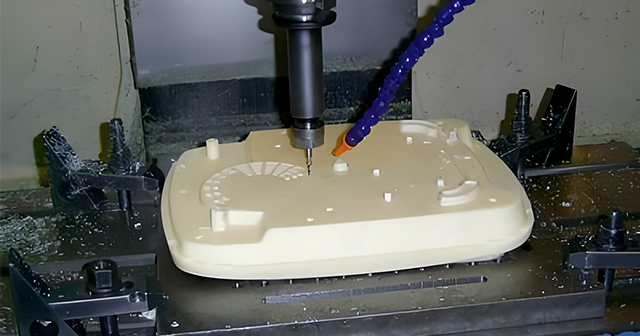
CNC machining of plastic is a subtractive manufacturing method in which the creation of parts involves removing material from the workpiece. The tool setup follows the digital instruction provided to the CNC machine and informs of G-code. The process is fully automated. Numerous types of parts are creatable with high accuracy and precise tolerances using plastic CNC machining.
CNC machining of plastic plays a significant role in the medical, semiconductor, aerospace, beverage, food, and automotive industries. This article will overview common CNC machining plastics, their advantages and disadvantages, applications, and surface finishing options for CNC machined plastic parts.
Common Plastics for CNC Machining
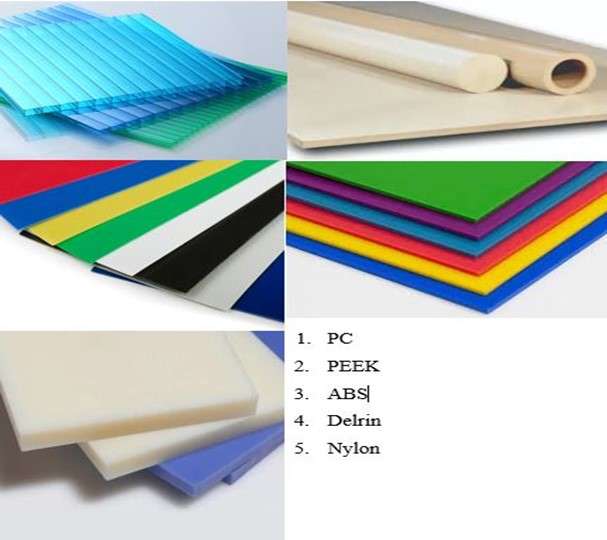
ABS
ABS is a hard and rigid plastic that offers excellent impact resistance. CNC machining of ABS leaves a smooth surface. However, if needed, different surface finishing, like surface metallization, electroplating, and painting, can be applied in post-processing. With CNC machining of ABS, various durable parts can be created for the aerospace, automotive, electronics, and home appliances industries.
Delrin
Delrin is a popular engineering thermoplastic, which is also known as polyacetal, or acetal. It offers low-moisture sensitivity, chemical inertness, electric & thermal insulation, and excellent mechanical strength. It is applicable in automotive to make seat belts, locks, clips, and various parts for pumps and fittings.
Nylon is known for its elasticity and applies to various general applications such as toys, ropes, tents, cookware, and automotive parts. It has exceptional tensile strength, chemical inertness, abrasion resistance, and strength-to-weight ratio.
Polycarbonate (PC)
Polycarbonate (PC) is a tough plastic, which offers excellent Stiffness, creep resistance, impact resistance, and thermal stability. It is also transparent in nature. CNC machining of PC is used for bottles, discs, pumps, valves, and various automotive and aerospace applications.
PEEK
PEEK is a high-strength semi-crystalline thermoplastic that offers excellent electrical insulation, strength-to-weight ratio, thermal & chemical stability, and resistance to combustion. It is used in the automotive, aerospace, medical, and electronic industries to make various parts. Besides these, other various plastics are used in CNC machinings, such as Acrylic, Garolite G-10, FR4, Polyethylene (PE), Polypropylene (PP), PPSU, PPS, Polyetherimide, and PVC.
Plastic does not rust over time, even in areas with high moisture levels, whereas metal and alloys are known to have a high risk of corrosion. Therefore, plastic products produced through CNC machining are the trustworthy choices for applications where corrosion resistance quality is crucial.
Plastic is cost-effective material. Most plastics are cheaper than metal and alloys and provide unique physical and mechanical properties. Even while CNC plastic machining is more expensive than injection molding, it is still less costly than CNC metal and alloy machining.
You won’t notice a cost difference if you produce a small number of parts, but creating several parts at once results in significant financial savings.
Plastics are incredibly compatible with CNC machines and require less time for machining. Prototypes for any applications can be prepared within a few hours. It allows manufacturers to test the prototypes quickly and decrease the time for prototyping. If you need customized parts, that also takes less time than injection molding and other manufacturing approaches.
Unlike metals and alloys, Plastics do not react with chemicals, which makes them ideal for various applications such as food processing and oil & gas.
Various parts for electronics and electrical applications need electrical insulation properties; those parts are easily creatable with CNC plastic machining. Therefore, it makes excellent choices for housing electrical devices, semiconductor handling devices, and parts for various circuit boards.
CNC machining of plastics leaves a smooth surface without any rough edges. In most cases, machining marks are invisible and provide a low level of roughness to the surface. In addition, other finishing can be applied, such as painting, metallization, and bead blasting.
Plastics can be machined with a high degree of accuracy Using CNC technology. It allows the creation of plastic parts with maintaining tight tolerances. Even complex shapes are easily achievable by using different CNC machining processes.
Disadvantages
1 Deformation of the workpiece
2 Cracks
3 Wrap and distortion of the workpiece
Cnc Machining Invar: A Complete Guide
What is Aluminum CNC PARTS